Why Gamy Stands Out in Modern Display Typography
In a digital landscape saturated with generic sans-serifs and overused script fonts, finding a typeface that commands immediate attention without sacrificing readability is a significant challenge. Gamy enters this crowded market not as another decorative option, but as a deliberate statement piece designed for high-impact communication. This bold display font bridges the gap between retro charm and contemporary minimalism, offering a visual voice that resonates strongly with brands and creators looking to cut through the noise.
For professionals ranging from freelance graphic designers to marketing directors at small businesses, the choice of typography often dictates the perceived value of a project. A standard font might convey competence, but a unique character like Gamy conveys confidence. It is engineered to function effectively in large sizes, where its distinct structural quirks become features rather than bugs. Whether you are designing a festival poster, a limited-edition product label, or a landing page hero section, Gamy provides a level of personality that few other typefaces can match.
Defining the Visual Identity of Gamy
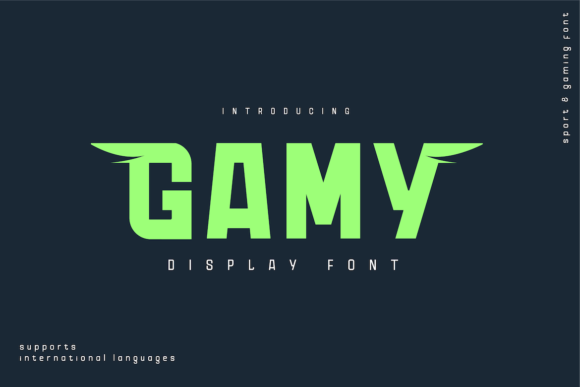
At its core, Gamy is defined by its robust weight and distinctive letterforms. Unlike traditional serif fonts that rely on delicate flourishes or geometric sans-serifs that prioritize uniformity, Gamy introduces a sense of movement and irregularity. The strokes vary in thickness, creating a dynamic rhythm that guides the eye across headlines and titles. This variation prevents the text from feeling static or monotonous, which is a common pitfall in modern web design.
The font's aesthetic leans heavily into a bold, almost industrial feel, yet it retains enough softness in its curves to remain approachable. This balance makes it versatile for various contexts. It can evoke the grit of a streetwear brand while simultaneously fitting the clean lines of a tech startup's promotional material. The key characteristic that sets Gamy apart is its ability to maintain legibility even when pushed to extreme scales. Many display fonts fail when scaled down, becoming muddy or indistinct; Gamy holds its structure well, ensuring that the message remains clear regardless of the medium.
Key Characteristics and Design Philosophy
- Bold Weighting: The heavy stroke width ensures visibility from a distance, making it ideal for outdoor signage and large-format prints.
- Unique Character Shapes: Letters feature slight asymmetries and custom terminals that give the font a hand-crafted appearance without the inconsistency of actual handwriting.
- High Contrast: The interplay between thick and thin elements within the letters adds depth and texture to the design.
- Versatile Styling: While primarily a display font, its open counters allow for creative kerning and layout adjustments that enhance visual interest.
These characteristics suggest that Gamy was built with specific use cases in mind: scenarios where the headline must do the heavy lifting. In a world where users scan content rather than read it word-for-word, a font like Gamy acts as a visual anchor. It stops the scroll. For bloggers and publishers, this means higher engagement rates on social media shares where thumbnails and headers are the primary point of contact.
Practical Applications in Professional Workflows
The utility of Gamy extends beyond mere aesthetics; it serves a functional purpose in branding and communication strategies. Consider a scenario where a freelancer is pitching a rebranding package to a client. Using a standard font might result in a presentation that looks professional but forgettable. Integrating Gamy into the mockups immediately elevates the proposal, signaling that the designer understands the power of typographic hierarchy.
Print designers will find particular value in how Gamy handles physical media. When converted to vector formats for printing, the font maintains crisp edges and sharp corners. This reliability is crucial for flyers, posters, and banners where print quality can make or break the campaign. The font's bold nature ensures that ink coverage is even, reducing the risk of smudging or breaking during the printing process. Furthermore, the unique shapes of the letters allow for creative negative space usage, enabling designers to play with layout density in ways that standard fonts restrict.
For digital marketers, Gamy offers a solution for email subject lines and ad creatives. In an inbox filled with thousands of messages, a subject line set in Gamy stands out against the sea of Times New Roman and Arial. Similarly, in pay-per-click advertisements, the font's bold presence can increase click-through rates by drawing the eye to the call-to-action. However, it is important to note that Gamy is not intended for body copy. Its complexity and weight would overwhelm long-form text, leading to reader fatigue. It is strictly a tool for emphasis, headlines, and short phrases.
Real-World Performance and Usability
When evaluating Gamy for real-world projects, consistency is a major factor. The font family typically includes a range of weights and styles, allowing for hierarchical differentiation within a single design system. This flexibility ensures that a brand can use Gamy for both main headlines and subheadings while maintaining a cohesive look. The spacing (kerning) is generally well-adjusted out of the box, though designers may need to fine-tune specific letter pairs to achieve perfect alignment, especially in all-caps settings.
One practical consideration for users is file compatibility. As a modern display font, Gamy supports OpenType features that enable advanced ligatures and alternate characters. These features add an extra layer of customization, allowing designers to swap out standard glyphs for more stylized versions depending on the context. This capability is particularly useful for logo design, where a unique letterform can define the entire brand identity. For educators and presenters, using Gamy in slide decks can transform a standard business report into a visually engaging story, helping to retain audience attention during long presentations.
Who Benefits Most from Gamy?
While Gamy has broad appeal, certain demographics and industries will derive the most value from its specific attributes. Entrepreneurs launching new products often struggle with packaging design. They need something that looks premium yet accessible. Gamy fills this niche perfectly, offering a look that suggests quality craftsmanship without appearing overly ornate or expensive.
Freelance illustrators and artists who sell their work often need promotional materials that reflect their personal style. Gamy provides a neutral yet expressive backdrop that allows artwork to shine while still providing necessary textual information. For event organizers, the font's ability to convey energy and excitement makes it an excellent choice for concert posters, conference schedules, and ticket stubs. The bold nature of the typeface aligns well with the high-energy environments these events create.
Small business owners in competitive markets also benefit significantly. Whether running a coffee shop, a boutique clothing store, or a local consultancy, having a distinct visual identity is non-negotiable. Gamy helps establish that identity quickly. It signals that the business pays attention to detail and is willing to invest in high-quality design assets. This perception of care often translates into customer trust and loyalty.
Potential Limitations and Strategic Use
No typeface is a universal solution, and Gamy is no exception. Its primary limitation lies in its specificity. It is not suitable for formal documents, legal contracts, or academic papers where neutrality and tradition are preferred. Attempting to force Gamy into these contexts would likely undermine the credibility of the content. Additionally, because of its strong visual presence, it requires careful pairing with secondary fonts. If paired incorrectly, the design can become chaotic or visually jarring.
Designers should exercise restraint when using Gamy. Overuse can lead to "design fatigue," where the audience becomes desensitized to the boldness. The most effective strategy is to use Gamy sparingly, reserving it for the most critical messages. Let it be the star of the show, not the supporting cast. By limiting its application to headlines, logos, and key call-to-actions, creators can maximize its impact and ensure that every instance of the font feels intentional and powerful.
Long-Term Value and Future Relevance
Trends in typography shift rapidly, but the demand for bold, expressive typefaces remains constant. Gamy is positioned well for longevity because it avoids fleeting stylistic gimmicks in favor of solid structural integrity. Its blend of classic boldness with modern flair ensures that it will not look dated in five or ten years. For businesses investing in brand assets, this longevity is a key financial consideration.
Furthermore, as the digital ecosystem continues to evolve with larger screens and higher resolutions, the need for fonts that scale effectively becomes even more critical. Gamy's design philosophy anticipates this future, prioritizing clarity and impact at any size. Whether viewed on a mobile device screen or a massive outdoor billboard, the font delivers a consistent experience. This adaptability makes it a smart investment for anyone looking to build a lasting visual language that can grow alongside their organization.
Ultimately, Gamy represents a strategic choice for those who understand the power of typography. It is not just a collection of letters; it is a tool for communication, persuasion, and brand building. By integrating Gamy into your design workflow, you are choosing to prioritize impact and memorability. For professionals who want their work to leave a lasting impression, exploring the endless possibilities offered by Gamy is a logical and rewarding step forward.