Telone: A Futuristic Display Font Evaluation
In the landscape of digital and print typography, finding a typeface that bridges the gap between retro-futurism and modern legibility is a common challenge. Telone has emerged as a distinct option for designers seeking a cool, futuristic, and unique display font. Unlike standard sans-serif or serif families designed primarily for body text, Telone is engineered to command attention in headlines, posters, and large-format prints. This evaluation explores the characteristics of Telone, its practical applications, and the factors designers should consider before integrating it into their workflow.
Understanding the Design Philosophy
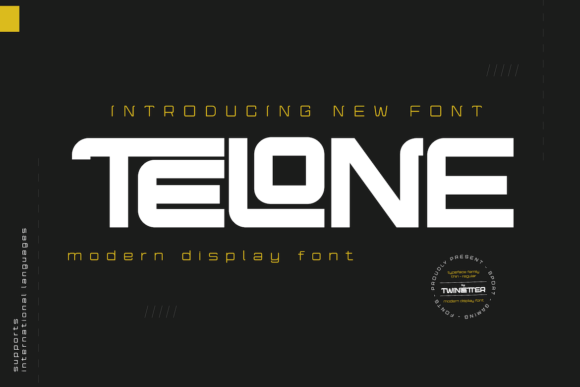
Telone is not merely a decorative font; it represents a specific aesthetic direction often associated with cyberpunk, sci-fi, and high-tech visual cultures. The design features sharp angles, geometric precision, and a structural rigidity that conveys a sense of forward momentum. When viewed on a screen or printed on paper, the characters possess a distinctive silhouette that differentiates them from more conventional typefaces like Helvetica or Arial.
The "cool" factor attributed to Telone stems from its ability to evoke a sense of innovation without sacrificing readability at larger sizes. The letterforms are constructed with a focus on contrast and negative space, allowing the font to maintain clarity even when scaled up for massive posters or flyers. This makes it a strong candidate for projects where the visual identity needs to communicate technology, speed, or a futuristic vision.
Practical Applications and Use Cases
Designers considering Telone should first evaluate their specific project requirements. While the font is versatile within the realm of display typography, it is not a one-size-fits-all solution. Its strength lies in situations where the text serves as the primary visual element rather than supporting content.
- Event Posters and Flyers: For music festivals, tech conferences, or gaming tournaments, Telone provides an immediate visual hook. Its futuristic nature aligns well with themes involving electronic music, virtual reality, or advanced technology.
- Brand Identity Logos: Companies in the software, robotics, or automotive sectors may find Telone suitable for logo lockups where a modern, aggressive look is desired. However, the uniqueness of the glyphs requires careful consideration regarding brand longevity.
- Editorial Headlines: In magazine layouts or digital articles focusing on future trends, Telone can effectively break the monotony of standard body fonts. It works best when used sparingly to highlight key concepts.
- Product Packaging: On consumer goods, particularly those targeting younger demographics or niche markets, Telone can create a shelf presence that stands out against competitors using traditional typography.
Benefits of Choosing Telone
There are several tangible benefits to selecting Telone for a design project. Primarily, the font offers a high degree of memorability. In a saturated market where many brands rely on safe, neutral typefaces, Telone allows a designer to establish a unique visual voice quickly. The font's futuristic aesthetic helps convey authority and innovation, which can be crucial for startups or new product launches.
Furthermore, Telone is optimized for large-scale output. When printed on posters or billboards, the geometric structure ensures that the letters remain crisp and do not suffer from the blurring or distortion that can occur with overly ornate display fonts. This technical reliability is essential for professional print work where image quality is paramount.
Additionally, the versatility of Telone extends across various media formats. Whether displayed on a mobile device, a website header, or a physical banner, the font maintains its intended character. This cross-platform consistency simplifies the design process for campaigns that require a unified look across multiple touchpoints.
Tradeoffs and Considerations
Despite its strengths, Telone comes with significant tradeoffs that must be weighed during the selection process. The most critical limitation is its lack of versatility for body text. The stylized nature of the characters, while striking at large sizes, reduces legibility when used in small point sizes or long paragraphs. Attempting to use Telone for extended reading material will likely result in user fatigue and reduced comprehension.
Another consideration is the potential for datedness. Fonts with strong stylistic signatures often risk becoming tied to a specific era. If the goal is to create a timeless brand identity, the heavy association of Telone with "futuristic" tropes might feel clichéd in five or ten years. Designers must decide if the immediate impact outweighs the long-term flexibility of a more neutral typeface.
There are also technical considerations regarding web implementation. While modern browsers support a wide range of font formats, highly stylized display fonts can sometimes cause rendering issues on lower-resolution screens or older devices. Ensuring that the font files are properly optimized and hosted is necessary to maintain the intended visual quality across all user environments.
Situations Where Alternatives May Be Preferable
While Telone is excellent for specific display purposes, there are scenarios where alternative fonts would serve the project better. If the design brief requires a tone of approachability, warmth, or tradition, Telone's cold, mechanical aesthetic may clash with the message. For instance, a healthcare provider or a non-profit organization might find a more organic or humanist typeface more appropriate.
Projects requiring extensive multilingual support should also exercise caution. Not all display fonts offer comprehensive character sets covering various languages and special symbols. If the project targets a global audience, it is vital to verify that Telone includes the necessary glyphs for the target regions. In such cases, a more robust type family with broader language coverage might be a safer choice.
Furthermore, if the design relies heavily on typographic hierarchy with mixed weights and styles, Telone's limited variation options could be restrictive. Many modern display fonts come in a wide range of weights (light, regular, bold, black) and widths (condensed, expanded). If Telone lacks these variations, designers may need to pair it with another font to achieve the desired contrast, adding complexity to the style guide.
Decision-Making Insights
To determine whether Telone aligns with your goals, designers should ask specific questions about the project context. Does the visual narrative demand a futuristic or technological vibe? Is the text primarily used for headlines or short phrases? Are the delivery channels capable of rendering high-quality graphics?
If the answer to these questions is affirmative, Telone is a strong contender. It offers a compelling way to differentiate a design while maintaining a level of professionalism. However, if the project prioritizes broad accessibility, long-term brand neutrality, or complex typographic systems, a more versatile typeface might be the prudent choice.
Ultimately, the success of any font selection depends on how well it serves the communication goal. Telone excels when used strategically to create impact and atmosphere. By understanding its limitations and leveraging its unique strengths, designers can effectively utilize this tool to produce stunning posters, flyers, and print materials that leave a lasting impression.
For those ready to explore its endless possibilities, downloading and testing Telone in a mockup environment is the best way to gauge its suitability. Experimenting with different sizes, colors, and backgrounds will reveal how the font behaves in real-world scenarios, ensuring that the final design meets both aesthetic and functional standards.