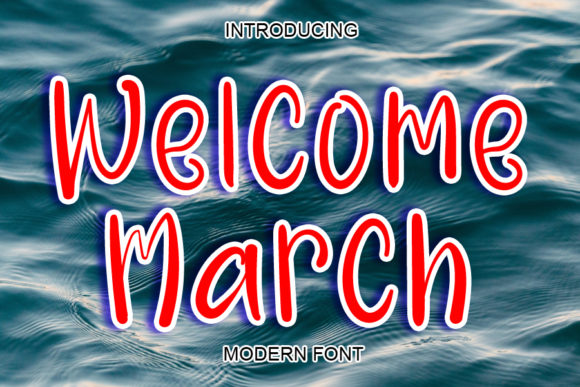
Why Welcome March Stands Out as a Distinctive Choice for Relaxed Display Design
In the crowded landscape of digital typography, selecting the right typeface often feels like navigating a maze of conflicting priorities. Designers frequently oscillate between the safety of standard sans-serifs and the boldness of high-contrast serifs, often overlooking fonts that occupy a unique middle ground. Welcome March emerges from this spectrum not as a dominant force, but as a specialized tool designed to inject personality without sacrificing readability. It is a display font characterized by its cute and relaxed demeanor, offering a natural aesthetic with just enough quirkiness to distinguish a project from the generic.
When evaluating a typeface, professionals look beyond mere visual appeal to understand how the font functions within a broader design system. Welcome March is not intended to be the workhorse of a corporate identity or the primary text for a dense legal document. Instead, it serves as a strategic accent for projects requiring an approachable, friendly, and slightly whimsical tone. Understanding its specific strengths and limitations is crucial for making an informed decision about whether this font aligns with your creative goals.
The Core Identity: Natural Quirkiness in a Digital World
The defining characteristic of Welcome March lies in its ability to feel organic rather than manufactured. Many modern fonts strive for geometric perfection, resulting in letterforms that can appear cold or sterile. In contrast, Welcome March embraces irregularities that mimic hand-drawn strokes while maintaining the structural integrity required for screen rendering. This "natural" quality allows it to brighten up designs that might otherwise feel too rigid or corporate.
The font's relaxed nature suggests a lack of urgency, which can be a powerful psychological cue for audiences. When used effectively, it signals to the viewer that the content is inviting, safe, and human-centric. The slight quirks embedded in the letterforms—such as subtle variations in stroke width or playful terminal shapes—prevent the design from feeling monotonous. These details are what make the font memorable, ensuring that a logo or headline sticks in the mind long after the user has scrolled past.
However, this distinctiveness comes with a caveat. The very features that make Welcome March charming also limit its versatility. Because the font relies heavily on its stylistic flair, it demands careful handling. Overusing it can lead to visual fatigue, where the constant presence of quirky shapes overwhelms the reader. Therefore, the decision to use Welcome March should always be weighed against the overall tone of the project.
How It Compares to Standard Display Options
To truly appreciate the value of Welcome March, it is helpful to compare it against the more conventional categories of display fonts. Most designers default to two main styles when choosing a headline font: the geometric (clean, circular, and precise) or the script (flowing, connected, and elegant).
- Geometric Sans-Serifs: Fonts in this category prioritize clarity and neutrality. They are excellent for tech startups, financial institutions, and minimalist portfolios. While they offer reliability, they often lack emotional resonance. Welcome March fills the gap here by providing a similar level of legibility but adding a layer of warmth that geometric fonts cannot achieve.
- Traditional Scripts: Script fonts are often used for weddings, luxury brands, and feminine-oriented products. While they share the "cute" attribute with Welcome March, scripts can sometimes struggle with readability at larger sizes or in all-caps formats. Welcome March offers a safer alternative for those who want a handwritten feel without the risk of illegibility or excessive formality.
- Bold Slab Serifs: Another popular choice for headlines, slab serifs convey strength and stability. They are robust but can feel heavy or aggressive. Welcome March provides a lighter touch, making it ideal for contexts where authority is less important than approachability.
This comparison highlights that Welcome March is not necessarily a replacement for these other categories but rather a complementary option. It excels in scenarios where the goal is to soften the message rather than amplify it. For instance, a brand selling handmade crafts or a community blog focused on lifestyle topics would find much more success with the relaxed vibe of Welcome March than with the stark precision of a geometric sans-serif.
Evaluating Tradeoffs and Decision Factors
Choosing a font is rarely about finding the "best" option; it is about finding the most appropriate one for the specific context. When considering Welcome March, designers must evaluate several tradeoffs regarding usability, scalability, and audience perception.
Scalability and Readability: One of the primary concerns with any display font is how well it performs across different media. Welcome March is optimized for headlines, logos, and short phrases. Attempting to use it for body copy or large blocks of text is generally inadvisable. The quirky details that add character can become distracting when viewed in small sizes or when the eye is forced to track through long paragraphs. If a project requires a single font family to handle both headings and body text, Welcome March will likely fall short, necessitating a pairing with a more neutral typeface.
Audience Expectations: The target demographic plays a significant role in font selection. Adults aged 20 to 50 span a wide range of tastes and expectations. A younger audience might appreciate the playful nature of Welcome March as a sign of authenticity and creativity. However, a more conservative audience, such as those in the healthcare or legal sectors, might perceive the same quirks as unprofessional or immature. Before integrating the font, it is essential to ask: Does this font match the voice my audience expects? If the answer is yes, Welcome March can be a powerful asset. If the answer is no, it may undermine the credibility of the message.
Brand Consistency: A font must support the long-term vision of a brand. Welcome March is distinct, which means it carries a strong personality. Once a brand adopts this style, it commits to a specific image of friendliness and informality. Changing direction later can be difficult if the visual identity becomes too closely tied to the font's specific quirks. Brands looking for a versatile identity that can evolve over time might prefer a more neutral option, whereas those seeking immediate recognition and charm will find Welcome March to be a valuable investment.
When to Choose Welcome March vs. Alternatives
Determining the right moment to deploy Welcome March requires a clear understanding of the project's objectives. There are specific situations where this font shines, and others where it should be avoided entirely.
Ideal Use Cases:
- Lifestyle and Hobby Blogs: Content focused on cooking, parenting, travel, or DIY benefits from the warm, inviting feel of Welcome March. It encourages readers to engage and explore, creating a sense of community.
- Event Branding: For workshops, local markets, or casual gatherings, the font's relaxed nature sets the right mood. It suggests that the event will be fun and accessible rather than stiff or exclusive.
- Product Packaging for Creative Goods: Items like candles, artisanal soaps, or children's toys often rely on packaging to communicate their unique qualities. Welcome March can help these products stand out on a shelf filled with generic competitors.
Situations to Avoid:
- High-Stakes Communication: Financial reports, emergency alerts, or serious news updates require fonts that convey authority and clarity. The playfulness of Welcome March could inadvertently trivialize important information.
- Technical Documentation: Manuals, software interfaces, and data-heavy dashboards demand maximum legibility. The decorative elements of Welcome March can interfere with quick scanning and comprehension.
- Global Brands: If a project aims for international expansion, a font with strong cultural associations or a specific "handmade" aesthetic might not translate well across all regions. Neutral fonts often have better cross-cultural compatibility.
Making the Final Decision
The journey to selecting the perfect font is iterative and often involves testing multiple options. Welcome March offers a compelling solution for designers looking to break away from the monotony of standard typefaces. Its natural, quirky, and relaxed attributes provide a fresh perspective that can elevate a design from functional to memorable.
However, success depends on restraint and strategic application. By understanding the limitations of the font and matching it to the right context, designers can harness its potential without compromising the user experience. Whether you are building a personal portfolio, launching a new product line, or revamping a community website, Welcome March invites you to add confidence to your projects. When applied thoughtfully, the results speak for themselves, creating a visual language that feels both intentional and welcoming.
Ultimately, the choice comes down to the story you wish to tell. If that story is one of warmth, creativity, and human connection, Welcome March is a worthy candidate. If the narrative requires strict professionalism or universal neutrality, other options may serve better. By weighing these factors carefully, you ensure that your typographic choices enhance rather than distract from your core message.